
Wednesday, September 11, 2013

Journal Post #4 Integrating Technology and Creating Change


 Photo Credit to Curtis Palmer on Flickr

Focus Question: How does technology promote educational change?

     Technology is constantly changing and improving. The commercial for the next iPhone comes on and suddenly we have to have it. There’s almost an innate need for evolvement within us, and sometimes technology can satisfy that need (until the next best version comes out). It is well known that students generally understand and enjoy technology, so why not integrate it into the classroom? Assuming teachers are willing to take this step, technology could change education in numerous ways. The first of these is instant research. “Ask anyone over the age of 50 with a PhD what it was like to get the information that they needed and they will generally begin to swear and discuss how young people these days have it so soft” (Wilhelm). Students have tiny computers in their pockets, and when used correctly, their questions can be answered almost immediately. Another big reason is simulating motivation and self-esteem. “Through either personal experience or a review of the literature, many innovators perceived the dramatic effects that technology can have on students' interest in class activities and their sense of their own capabilities” (Reasons for Bringing Technology Into Schools).  As I said earlier, why not integrate technology that students are comfortable using and enjoy using? 
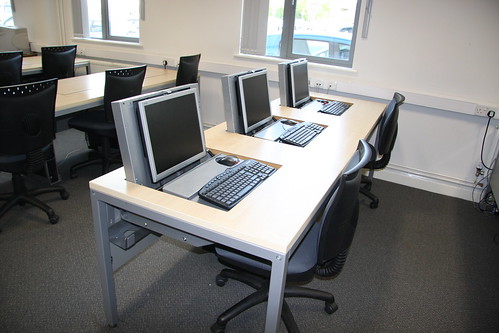
Photo Credit to James F Clay on Flickr

Tech Tool4.1: Online Technology Integration Resources

     Edutopia is a great website. I did last week’s post with some Edutopia articles and I was very impressed with the selection. The second site mentioned was the National Educational Technology Standards for Teachers (NETS-T). This website shows teachers how others have integrated technology into their classroom and discusses the different effects it’s had on their teaching methods. The third site listed is NCTE. It first discusses a weekly summary of English/language arts but also mentions posts from teachers that use technology within their classrooms. Because I already know and use Edutopia, I think NCTE is what interests me the most from this week’s Tech Tool. I love the idea of a blog of feedback from teachers that already use technology with their students.

Photo Credit to audiovisualjunkie on Flickr

Chapter Summary: Integrating Technology and Creating Change

     This chapter discusses integrating technology into classrooms, and the pros and cons that come with it. The main problems addressed are the digital divide, inequality, and the gap in participation. The divide discusses students that aren’t able to access the internet as easily as others. Digital inequality states that simply having computers around school isn’t enough. When students are outside of school, not all of them have internet access on weeknights and weekends. This leads to the participation gap, which states that students that have ready access are much more technologically knowledgeable as they have more exposure than students who do not have the same opportunities. “Often, economically advantaged kids get to do more intellectually challenging activities, a consequence of tracking by test scores where some youngsters are seen as talented and gifted while others are defined as lacking proficiency in basic skills”  (Maloy, 2011). I think that as long as teachers are willing to work with the technology they have, that any change and integration is good change/integration. Personally I’ve found that technology in the classroom is incredibly helpful. I really enjoyed the activity we did with Socrative, as I found the app itself to be very innovative. I also think that access to class materials via portal/canvas is something I can’t imagine not having. Without technology aiding my schooling, I’m not sure where I’d be; yet I’m continually learning about new sites, apps, and methods to access them. We are lucky enough to have constant access here at Edison, and I personally am lucky enough to have a small computer in my pocket 24/7.

References:

Maloy, R. W. (2011). Integrating Technology and Creating Change. Transforming learning with new technologies (p. 95). Boston: Pearson/Allyn and Bacon.
Reasons for Bringing Technology Into Schools. (n.d.). U.S. Department of Education. Retrieved September 11, 2013, from http://www2.ed.gov/pubs/EdReformStudies/EdTech/reasons.html
Wilhelm, Alex. "How Technology Has Changed Education - The Next Web." The Next Web - International technology news, business & culture. N.p., n.d. Web. 11 Sept. 2013. <http://thenextweb.com/insider/2011/01/05/how-technology-has-changed-education/>.

Thursday, September 5, 2013

Journal Post #3 Common Core Standards


Photo credit to scubasteveo on Flickr

The Common Core standards are basic rules for grades K-12. They are important because they set a specific set of goals to be accomplished prior to entering college whether it be for two years or four. Pros and cons vary (unarguably), though I found a blog that not only presented both sides well but discussed them in depth. There was one pro vs. con that specifically stood out to me. 
"Pro: The Common Core Standards are not finding the lowest common denominator to build on, but are in fact designed to build upon the best standards so that even states with successful standards will be taking a step forward in education. Con: The Common Core Standards is a program pushed by the government – Adopt the program or no money" (Common Core).
I think the idea behind it all is brilliant. I love the idea of everyone being able to improve including states that have previously been successful. However, I think that budget is and always will be the elephant in the room. 
 "Budget has always – and probably will always – be a point of contention and concern for institutes of education. It costs money to educate others, so when the federal government promises money in return for adhering to new educational programs, many schools cannot help but jump through the hoops disregarding the purpose of education in order to maintain numbers and jobs" (Common Core).
        I think it's great that the government's trying to be more involved in order to better the futures of both current and future students, however "opponents assert that more government involvement will not necessarily translate into higher quality education" (NES). However well-intentioned, I think one program for so many diverse schools/counties/classrooms is a bit far fetched. 


Article Credit:

Sunday, September 1, 2013

Journal Post #2 K-12 Technology: Benefits & Drawbacks

      
Photo Credit to Alec Couros on Flickr

     K-12 Technology is an article written by Matthew Lynch discussing technology's current benefits and drawbacks. Mr. Lynch opens with an MLK quote discussing change and the effort required to achieve it. He then goes on to state that he is indeed in favor of technological advancement but fears the “indirect effects of technology on the comprehension habits of our youngest learners.” This was the first point I truly agreed with. Mr. Lynch discusses how helpful technology can be in terms of acquiring information but at what point do we draw the line? He mentions that “98% of children have access to a TV while 72% have access to a computer.” At what point do we decide that Skype is better than a face to face conversation? What happens when we lose whatever sense of socialization we have left?

      Mr. Lynch then discusses instant gratification. Most children have mini computers in their pockets and become used to the idea of a “quick fix” as Mr. Lynch puts it. I 100% agree with his comment on children not understanding waiting for answers. Professor Coleman made a point last class about keeping students interested by integrating the technology they've grown to know and love. I think using apps like “Socrative” could genuinely help with this. Don't try to change methods students have grown accustomed to, but instead incorporate them into lesson plans and assignments in order to avoid that gap between your methods and theirs.

 Photo Credit to Sonja Stark on Flickr
      I think there's one strong technological drawback that wasn't discussed, and that's mental illness. I think mental issues are swept under the rug much too often, and that technology plays a huge role with mental illness in K-12 students. I found an article discussing the impact technology has on mental health that I wanted to share with you all. It discusses a recent study conducted on internet usage and lack thereof. 
     “When many of these participants stepped away from the World Wide Web, they had a lot of difficulty and exhibited signs similar to those of someone going through withdrawal from alcohol or drugs. It was clearly more difficult for the younger participants to step away. Fifty-three percent reported they were upset when they could not use the Internet and another 40% said that they were lonely when they could no longer interact with their friends online. In fact, many could not (or were not totally willing to) give up the Internet completely, even for just 24 hours.” Wow! The article then goes on to discuss the effects of these internet addictions. “Internet users are losing touch with the traditional ways that many of the previous generations enjoyed just being kids. Going outside, playing with friends or reading a book are far less common than they once were. We are raising youngsters that will succeed in the Internet driven world, but will they be able to interact with each other when they aren’t doing so over a computer screen?” The author ends her post saying “we need to have a better balance between face-to-face communications and online ones.” Without actual socialization, I fear the presence of mental illness will skyrocket.

      Overall I was very impressed with Mr. Lynch's article and even more-so by the article written by Emily Murray. I think both authors made strong points on the effects of technology. I especially enjoyed Mr. Lynch's point on instant gratification and students that don't understand waiting; though I disagreed with his point on reading for pleasure. I was surprised he didn't mention more pressing issues, such as mental health. I think that's a huge subject to consider when discussing the K-12 age group. After reading the statistics he posted regarding children and their access to technology, all I could think about was how much earlier they'd find themselves involved with cyber-bullying and internet addiction. While technology does and will continue to benefit educators in the classroom, there are some serious issues to be considered. 


Article Credit:
Matthew Lynch's Article


Thursday, August 29, 2013

Journal Post #1 David Warlick: Schools that Practice Learning-Literacy


Photo Credit to Scott McLeod on Flickr

     I've chosen to reflect upon three of the seven points Mr. Warlick made that I thought stood out.


  • There is a natural convergence between the rich information skills of literacy and numeracy, and the information and data that define the content areas.


     After reading this section, I began to think about the differences technology has made on both learning and learning environments. The information that is now available to us through networking is astounding. Warlick discusses accessing information and translating it through digital mediums. Years ago he would have been searching through archives in the backs of libraries and supply rooms. It is amazing to think how far we've come, and even more exciting to think about where technology will take us in the future. 


  • The distinctions between teacher and student begin to blur.


     My favorite point made in this section is as follows. "It (literacy) no longer seeks to make readers.  It makes master learners, people who can successfully learn, unlearn, and relearn." The rest of this section discusses focusing on the best learning practices as opposed to the best teaching practices. I think this is a wonderful point. All students think, process, and learn differently from one another. Focusing on addressing those differences is KEY in my opinion. There are always differences and acknowledging them leads to success. This point in the article also discusses teaching as a valuable way to learn. I completely agree with this. As a student working in Cornerstone classrooms, I've found that the more classes I attend and the more chapters I attempt to teach the more I pick up. These are subjects I'd thought I'd mastered until I go over them in class and think about them in a whole new way. 


  • There is less reliance on textbooks and authority, and more reliance on the work of learning.


     This portion of the article discusses being an active participant when it comes to learning. Warlick discusses going to school years ago and never questioning his textbooks or teachers. At the time, there wasn't much reason to. Now that the internet exists and is open to all, we have learned to be cautious about what we read and question everything in order to ensure accuracy. The last paragraph to this section was my favorite. Warlick states: "To become literate, students should learn within an information environment that exemplifies today’s information landscape, where discussions of an idea’s validity become part of learning the idea." I love the idea of incorporating validity into lesson plans around the world. It's incredibly important to teach students to formulate their own opinions and do the research necessary to back up their ideas. Without this, learners everywhere would take each statement as is, and failure to explore validity results in failure to learn.

     Warlick ends his article with this quote: “In a school that practices learning-literacy, teachers model learning, students learn to teach themselves, and schools educate the community.“ I adore this quote. I find that it sums up every point Warlick discussed throughout in a simple and positive manner. After reading this article in it's entirety, I've already looked into some more of Warlick's work. I'm very impressed!